
Your homepage may clearly explain your business to you.
That does not mean it clearly explains your business to a first-time visitor.
This is one of the most common problems behind underperforming business websites.
The business owner knows what they sell. The designer knows what the page is supposed to communicate. The copywriter knows the strategy behind the headline.
The customer sees none of that background.
They simply land on the page and try to figure out:
“What is this, and why should I care?”
If your value proposition cannot answer that quickly, it is worth testing before spending more time redesigning the entire website.
What You Should Be Testing
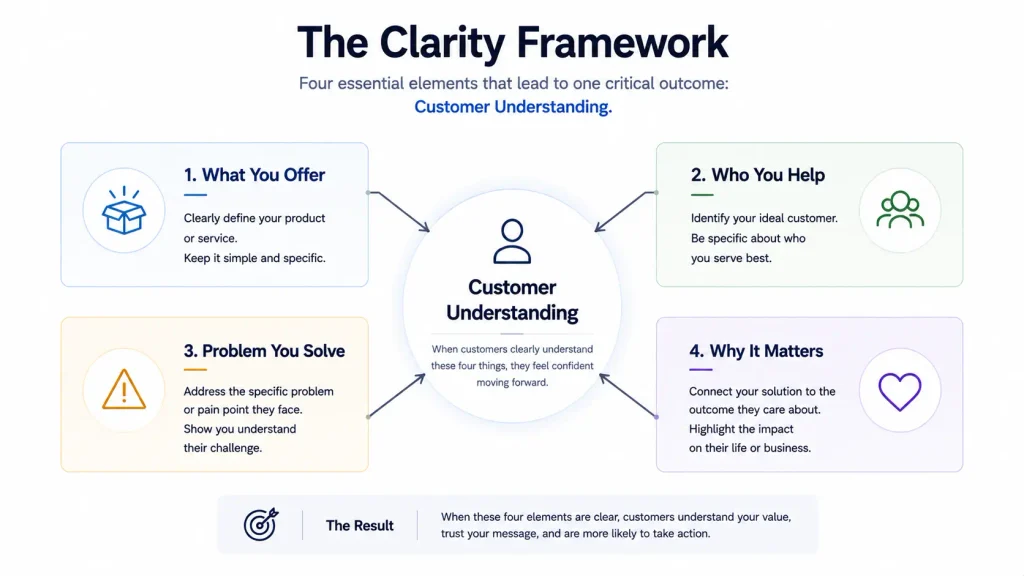
A useful value proposition should make your core offer reasonably easy to understand.
At minimum, a visitor should be able to identify:
- What you offer
- Who you help
- What problem or need you address
- Why the offer is worth considering
You don’t necessarily need to explain everything above in one sentence.
But the overall above-the-fold experience should give visitors enough context to understand where they are and what you offer.
Test 1: Ask Someone to Describe Your Business
This is probably the simplest test.
Show someone your homepage without explaining anything.
Then ask:
“What do you think this business does?”
Write down their answer.
Don’t correct them.
Don’t add context.
Don’t say, “Actually, what we mean is…”
Their initial interpretation is exactly what you’re trying to discover.
What Are You Looking For?
You are not looking for identical wording.
You are looking for direction.
If you run a web design business and someone says:
“They help small businesses improve their websites.”
that’s probably a reasonable interpretation.
If they say:
“They sell website software,”
something needs attention.
Test 2: Ask Who the Offer Is For
A business can explain what it does while still being unclear about whom it serves.
For example:
“Professional marketing solutions for modern businesses.”
Which businesses?
Startups?
Local restaurants?
Ecommerce companies?
B2B companies?
Professional service firms?
The broader the message, the harder it can be for the right visitor to recognize that the offer is meant for them.
Ask testers:
“Who do you think this website is designed to help?”
Their answer can reveal whether your positioning is specific enough.
Test 3: Ask What Problem You Solve
Now move beyond description.
Ask:
“What problem do you think this company solves?”
This is important because customers don’t usually buy a service simply because it exists.
They buy a desired outcome or solution to a problem.
A website visitor may understand that you provide SEO.
That doesn’t mean they understand why they should care.
Perhaps what they actually need is more qualified local traffic.
The website needs to connect the service with the business problem.
Test 4: Remove the Brand Name
This is a useful way to reduce familiarity bias.
Show the value proposition without the company name or familiar branding when possible.
Then ask what the person thinks the company does.
If your messaging only becomes understandable after someone recognizes your brand, the message may not be doing enough work on its own.
This is especially useful for newer businesses that don’t have strong brand recognition yet.
Test 5: Ask What They Would Do Next
After showing the page, ask:
“What would you do next?”
Possible answers might include:
- Look at the services
- View pricing
- Read case studies
- Contact the business
- Leave the website
- Search for another option
There isn’t always one correct answer.
But if the person says:
“I don’t know what this company wants me to do,”
your page may have a clarity or navigation problem.
Don’t Confuse Clarity With Conversion
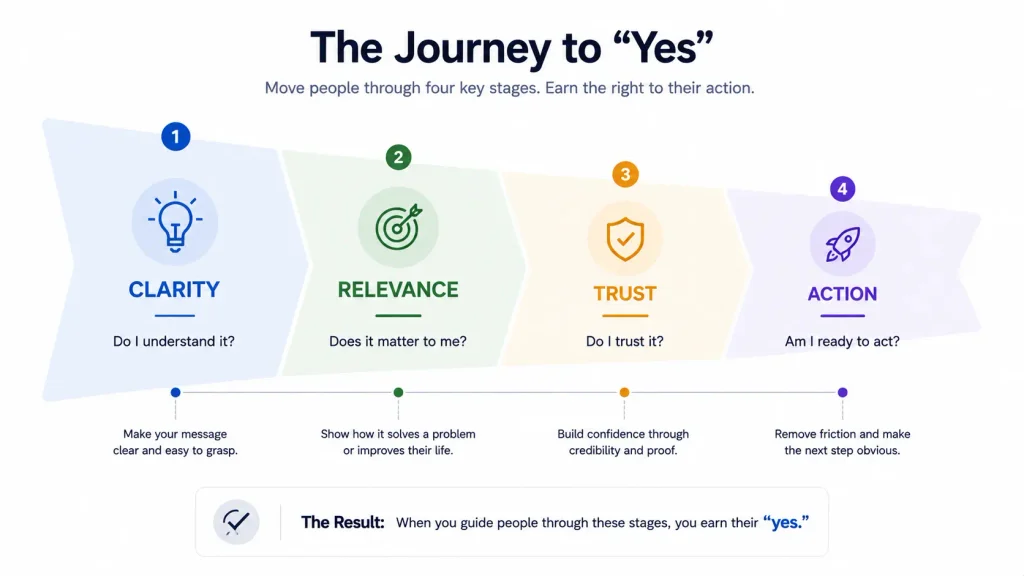
This distinction matters.
Suppose someone says:
“They build websites for small businesses.”
Excellent.
Your value proposition is probably clear enough at a basic level.
But they might then say:
“I wouldn’t contact them because I don’t understand why they are different.”
That’s not necessarily a clarity problem.
It’s a differentiation problem.
Another person might say:
“I understand exactly what they offer, but I don’t need it right now.”
That’s a relevance problem.
Testing helps you separate these issues instead of changing your headline blindly.
Use Customer Language in Your Copy
One of the best sources of messaging ideas is often sitting in your inbox.
Look at:
- Customer emails
- Sales conversations
- Contact form submissions
- Reviews
- Support questions
- Consultation notes
- Discovery call recordings
- Testimonials
Look for repeated phrases.
How do customers describe their problem?
What outcome do they want?
What words do they use to explain why they contacted you?
That language can often make your website more relatable than generic marketing terminology.
Test Before Redesigning Everything
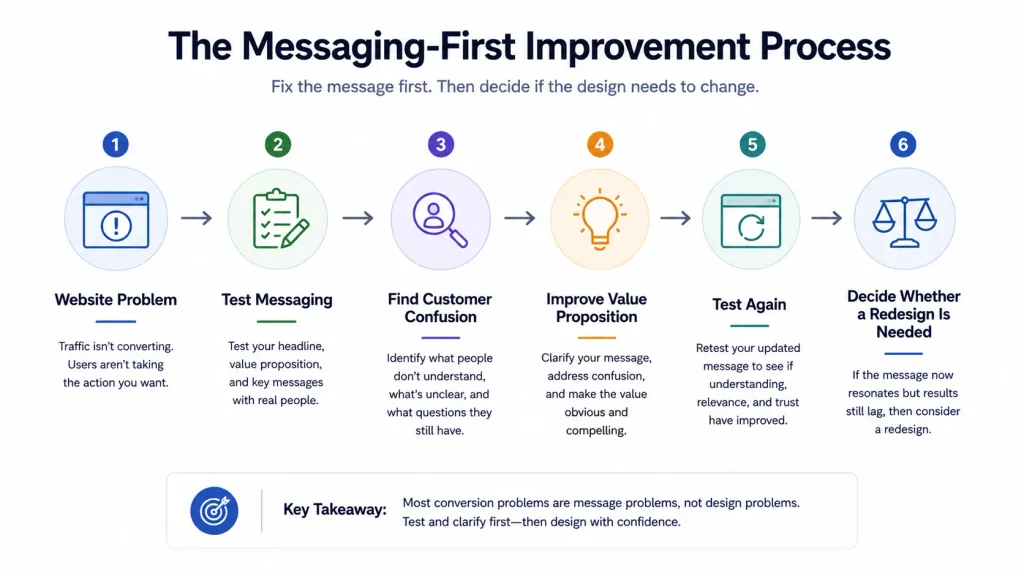
This is especially important for small businesses.
If your website isn’t converting well, the first reaction is often:
“We need a new website.”
Maybe.
But perhaps the bigger problem is the message.
A completely new design won’t automatically fix unclear positioning.
Before rebuilding everything, test:
- Your headline
- Supporting statement
- Primary CTA
- Service description
- Audience positioning
- Main offer
Sometimes a messaging improvement can reveal whether the existing design is actually the main problem.
A Practical Testing Workflow
Here is a simple process you can use.
1. Define the intended message
Write down what you want customers to understand.
2. Find representative testers
Choose people who resemble your target customers.
3. Show the page without explanation
Let them interpret it naturally.
4. Ask comprehension questions
Find out what they think you do, who you help and what problem you solve.
5. Capture exact wording
Don’t just write “they understood it.”
Record what they actually said.
6. Identify patterns
Look for repeated confusion, assumptions and language.
7. Improve the message
Rewrite the weakest parts.
8. Test again
Treat messaging as something you refine rather than something you get perfect on the first attempt.
When Analytics Become Useful
Qualitative testing tells you what people understand.
Website analytics can help tell you what people do.
For example, if visitors understand your offer but rarely click the CTA, there may be an issue with:
- Offer relevance
- Trust
- CTA clarity
- Page structure
- Friction
- Perceived value
That is why I would not rely on one measurement alone.
Use customer conversations to understand the message.
Use behavioral data to understand what happens next.
The Goal Is Not Clever Copy
A value proposition doesn’t need to sound sophisticated.
It needs to be useful.
A visitor should not have to decode your homepage to figure out what you sell.
The strongest message is often the one that makes the right customer think:
“Yes, this is for me.”
That is the standard worth testing.